Recently, Prof. Yuefeng Nie's research group successfully prepared high-quality superconducting freestanding infinite-layer nickelate membranes by utilizing Oxide Molecular Beam Epitaxy (OMBE) combined with highly efficient transfer technology. With more degrees of freedom, freestanding membranes can be attached to various external platforms, enabling the application of large continuous uniaxial/biaxial strain, which is far beyond than what can be attained in single crystals and epitaxial films. It also provides a new platform for exploring the pairing symmetry and superconducting mechanism by stacking of twisted membranes.
As a new type of unconventional high-temperature superconductors, the infinite-layer nickelate is an important system for exploring the high-temperature superconducting mechanism, which shares similar crystal structures and electronic configurations with cuprate superconductors. However, superconductivity has only been observed in epitaxial thin films and the preparation of these superconducting films is extremely challenging. To obtain the superconducting infinite-layer structure phase (RNiO2), it is vital to grow high-quality perovskite precursor phases (RNiO3) and then remove the apical oxygen atoms through topotactic reduction. Due to the large difference of lattice constants in the perovskite precursor phase and the infinite-layer structure phase, the chosen of the substrate for epitaxial growth is limited, leaving a narrow range of strain modulation. Compared to epitaxial thin films and bulk materials, freestanding membranesallows for a much wider range of strain modulation in phase diagrams. Heterostructure stacking is also available for exploring the pairing symmetry in nickelates. However, both the demanding growth requirements for the perovskite precursor phase and the metastable property of the reduced infinite-layer phase pose significant challenges for the preparation of superconducting freestanding infinite-layer nickelate membranes.
In this work, the research group utilized OMBE to engineerthe interface chemical composition with atomic precision, solving the difficulties mentioned above. The SrTiO3 (STO) buffer layer was introduced to prevent inter-diffusion between the water-soluble sacrificial layer Sr4Al2O7 (SAOT) and the perovskite precursor phase La0.8Sr0.2NiO3 (LSNO3). An extra [LaO] layer was deposited on the specific TiO2-terminated STO buffer layer, suppressing the formation of impurity phases and improving the crystalline quality of the perovskite precursor phase. The water-soluble infinite-layer structure phase thus could be obtained through topotactic reduction. In transfer process, instead of the commonly used water-soluble sacrificial layer Sr3Al2O6 (SAOC), a newly developed water-soluble layer SAOT with high efficiency (dissolution rate is approximately 10 times than that of SAOC) was employed. Combined with a room-temperature electrode transfer technique, sample degradation and oxygen backfilling could be to minimized. Based on these advancements, Superconducting freestanding infinite-layer nickelate membranes were successfully prepared, which offers an opportunity for strain modulation in nickelate superconductors. Additionally, this method could also be extended to the Ruddlesden–Popper nickelate system to explore superconductivity under high pressure.
The results titled Superconductivity in freestanding infinite-layer nickelate membranes is published in Advanced Materials (https://doi.org/10.1002/adma.202402916). PhD student Shengjun Yan, Wei Mao and Wenjie Sun are co-first authors. Prof. Yuefeng Nie is the corresponding author. Dr. Haoying Sun and Dr. Yueying Li have made important contributions to this research. This work has also received strong support and assistance from Prof. Zhengbin Gu and Prof. Peng Wang. This work was supported by the National Key R&D Program of China and the National Natural Science Foundation of China.
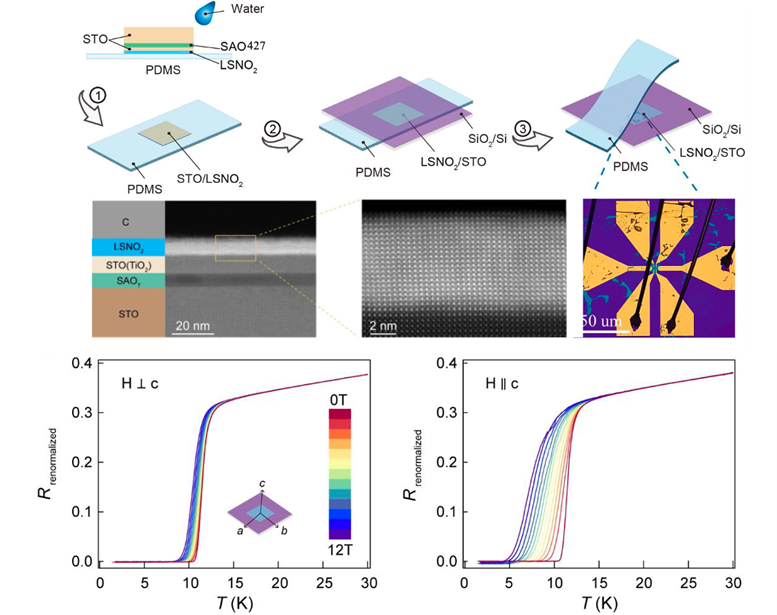
Figure 1 Preparation and transport properties of high-quality freestanding infinite-layer nickelate membranes.
Article link: https://doi.org/10.1002/adma.202402916